


The automotive industry is undergoing its most profound transformation since the introduction of the assembly line. While electric powertrains and autonomous driving systems frequently capture the public eye, an equally radical shift is occurring within design studios. Artificial intelligence is fundamentally rewriting the rules of how vehicles are conceptualized, engineered, and brought to market.
Historically, designing a new vehicle was a laborious process spanning several years. It required thousands of manual sketches, clay models, and physical crash tests. Today, automotive manufacturers use machine learning algorithms, deep neural networks, and generative design tools to compress development timelines, optimize vehicle performance, and explore entirely new design languages. This shift is not merely about automation. It represents a fundamental partnership between human creativity and computational power.
From Clay to Code: The Evolution of Conceptual Design
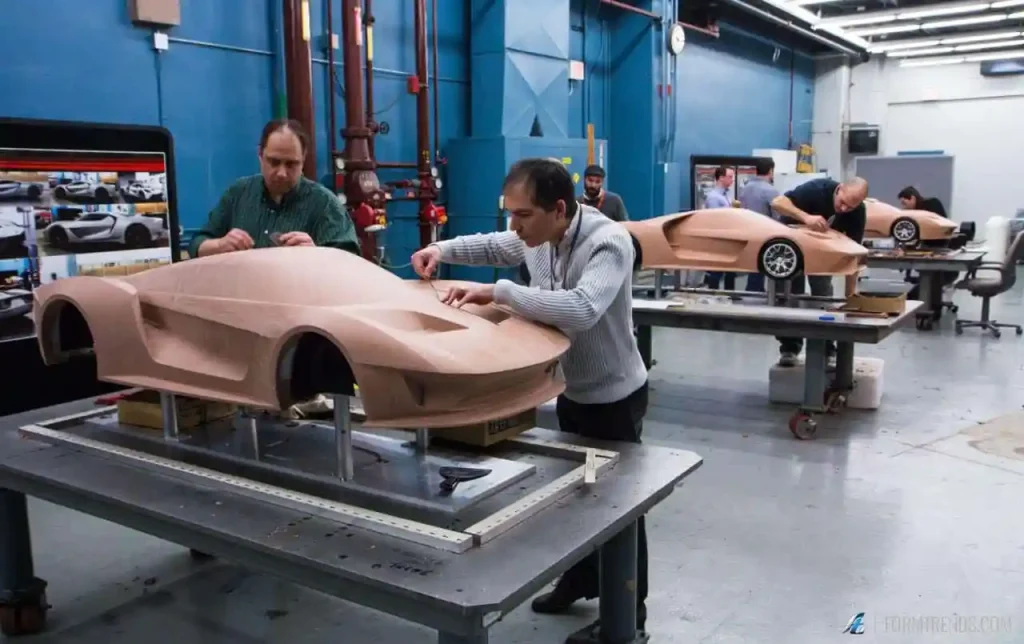
In traditional automotive design, the journey began with a two-dimensional sketch. Designers would spend months translating ideas into physical clay models at a 1:1 scale. While clay models remain important for assessing a vehicle’s physical presence under natural light, AI is shifting the early phases of design entirely into the digital realm.
Generative AI tools trained on decades of historic vehicle data can now produce thousands of unique concept sketches in seconds based on text or parameter inputs. An engineer can input specific parameters, such as a targeted drag coefficient, battery pack volume, and pedestrian safety requirements. The AI tool then outputs dozens of viable silhouette variations that meet those exact engineering constraints.
This capability changes the role of the automotive designer. Instead of spending weeks drawing individual iterations, designers act as curators. They evaluate the machine-generated options, select the most promising directions, and refine them. This iterative speed allows design studios to explore a far wider variety of aesthetic choices than was ever possible using manual methods.
Generative Design and Structural Optimization
Beyond the outer shell of the vehicle, AI is transforming structural engineering. Generative design uses machine learning algorithms to mimic nature’s evolutionary approach to structures. Engineers define the functional requirements of a component, including loading conditions, stress limits, material type, and manufacturing methods. The AI then iterates thousands of design options, selectively removing material from areas that experience low stress while reinforcing high-load zones.
The results are often organic, bone-like structures that a human engineer would never intuitively draw. These AI-designed components provide distinct advantages over traditionally engineered parts.
-
Mass Reduction: Generative design can reduce the weight of individual structural components by 20% to 40% while maintaining or improving structural integrity.
-
Part Consolidation: AI can combine complex assemblies consisting of dozens of individual stamped pieces into a single, highly complex cast component.
-
Material Efficiency: By placing material only where stress demands it, manufacturers minimize raw material waste during production.
Weight reduction is incredibly important in the modern automotive landscape. For internal combustion engine vehicles, lower weight means better fuel economy and reduced emissions. For electric vehicles, every pound saved directly translates to increased driving range, helping to alleviate consumer range anxiety and reduce the size and cost of the required battery pack.
Aerodynamics and Virtual Wind Tunnel Testing
Aerodynamic efficiency dictates how far a vehicle can travel on a single charge or tank of fuel. Perfecting a vehicle’s airflow traditionally required building expensive physical prototypes and placing them inside massive wind tunnels. Wind tunnel time is exceptionally expensive and highly restricted during vehicle development.
AI is changing this paradigm through advanced Computational Fluid Dynamics. Traditional CFD software solves complex physics equations to simulate airflow, a process that can take hours or days for a single vehicle configuration. AI models trained on historical wind tunnel and CFD data can predict aerodynamic behavior in real time.
When a designer modifies a vehicle body panel or alters the angle of a rear spoiler, the AI immediately updates the digital airflow visualization. This instant feedback loop allows designers to sculpt more aerodynamic shapes without waiting for engineering departments to run lengthy simulations. By the time a physical model is built for final validation, the vehicle has already undergone thousands of hours of virtual aerodynamic optimization.
Enhancing Cabin Ergonomics and the User Experience
The rise of autonomous driving technology and advanced infotainment systems has shifted the focus of vehicle design from the exterior to the interior. The modern cabin is no longer just a cockpit for driving; it is a mobile living space, mobile office, and digital entertainment hub. AI plays a crucial role in designing these complex interior environments.
Designers use machine learning algorithms to analyze human ergonomics data across diverse populations. AI simulates how occupants of various heights, body types, and mobility levels interact with the vehicle interior. This includes optimizing the reachability of touchscreen controls, ensuring ideal visibility lines, and maximizing seat comfort over long journeys.
Furthermore, AI assists in the layout of acoustic components. By simulating how sound waves travel through different cabin materials, AI helps engineers place sound-dampening insulation and premium speaker components to create quiet, acoustically balanced interiors. This digital optimization ensures that voice recognition systems can accurately pick up passenger commands over ambient road noise.
Accelerating Crashworthiness and Safety Simulations
Designing a safe vehicle requires verifying how thousands of components react under the extreme forces of a collision. Historically, this meant crashing physical prototype vehicles into barriers, a destructive process that costs hundreds of thousands of dollars per test.
While physical crash testing remains a strict regulatory requirement for vehicle certification, AI has dramatically reduced the number of physical crashes needed during development. Deep learning algorithms analyze data from decades of real-world accidents and previous digital crash simulations.
These AI models predict how specific materials and geometric structures will deform during a front, side, or rollover impact. The predictive accuracy is so high that engineers can discover structural weaknesses and optimize crumple zones long before manufacturing tools are ever created. This virtual validation accelerates safety engineering, resulting in vehicles that better protect occupants and pedestrians alike.
Sustainable Material Selection
Modern automotive design is deeply intertwined with environmental sustainability. Automakers are looking to reduce the carbon footprint of their vehicles throughout their entire lifecycle, from manufacturing to end-of-life recycling. AI helps design teams make smarter, more sustainable material choices.
AI-driven databases track the lifecycle emissions, durability, costs, and recycling potential of thousands of polymers, metals, and composite materials. When designing a new interior component or structural bumper, the AI can suggest alternative bio-based plastics or recycled composites that match the structural properties of virgin, petroleum-based materials. This allows automakers to meet strict environmental targets without sacrificing vehicle longevity or passenger safety.
The Future: A Co-Creative Design Process
Artificial intelligence is not replacing human designers. Car design remains a deeply emotional process driven by brand identity, cultural trends, and human desire. A computer cannot independently understand what makes a vehicle look aggressive, elegant, or iconic to a human consumer.
Instead, AI serves as an advanced tool that removes the tedious, repetitive bottlenecks from the design process. By taking over the complex mathematics of aerodynamics, crash safety, and structural optimization, AI liberates designers to focus on pure creativity and brand storytelling. The future of automotive design lies in this co-creative relationship, where human artistic vision is refined and brought to life by computational intelligence.
Frequently Asked Questions
Does the use of AI mean that all future cars will look the same?
No. While AI helps optimize vehicles for aerodynamics and regulatory safety compliance, which can lead to some shared silhouette characteristics, it actually gives designers more freedom to differentiate. Because AI handles the complex engineering constraints in real time, designers can rapidly test unique styling cues, lighting architectures, and brand-specific details without fearing they will compromise the vehicle’s structural integrity or aerodynamic performance.
How does AI impact the timeline of bringing a new car from concept to production?
Traditionally, developing a vehicle from a blank sheet of paper to a production-ready automobile took anywhere from five to seven years. By replacing physical prototypes with highly accurate virtual simulations and accelerating the concept generation phase, AI tools help reduce this development cycle to between two and three years.
Can AI design software predict how a vehicle will handle on the road?
Yes. AI can simulate vehicle dynamics by analyzing the interplay between the chassis suspension, weight distribution, tire characteristics, and steering geometry. It allows engineers to virtually test how a vehicle will handle extreme maneuvers, slick roads, or rough terrain before building any physical mechanical components.
How does AI contribute to the reduction of wind noise in electric vehicles?
Electric vehicles lack the masking noise of an internal combustion engine, making wind and road noise much more noticeable inside the cabin. AI tools analyze the micro-geometries of side mirrors, window pillars, and wiper blades to identify and eliminate minor turbulent air currents that create high-frequency whistling or buffeting noises, ensuring a quiet interior.
Is AI being used to design the manufacturing plants that build these cars?
Yes. AI is used in digital twin technology, which creates a complete virtual replica of an automotive assembly plant. Designers and factory engineers use AI to simulate the movement of robotic arms, assembly workers, and raw materials to identify bottlenecks and optimize production efficiency before the physical assembly line is constructed.
How does AI help in selecting colors and materials for vehicle interiors?
AI tools analyze global consumer trends, fashion movements, and purchasing data to predict which color palettes and fabric textures will be popular when a vehicle debuts years in the future. It also assists in testing how different interior surfaces hold up against UV radiation, wear and tear, and chemical cleaners over a fifteen-year lifespan.